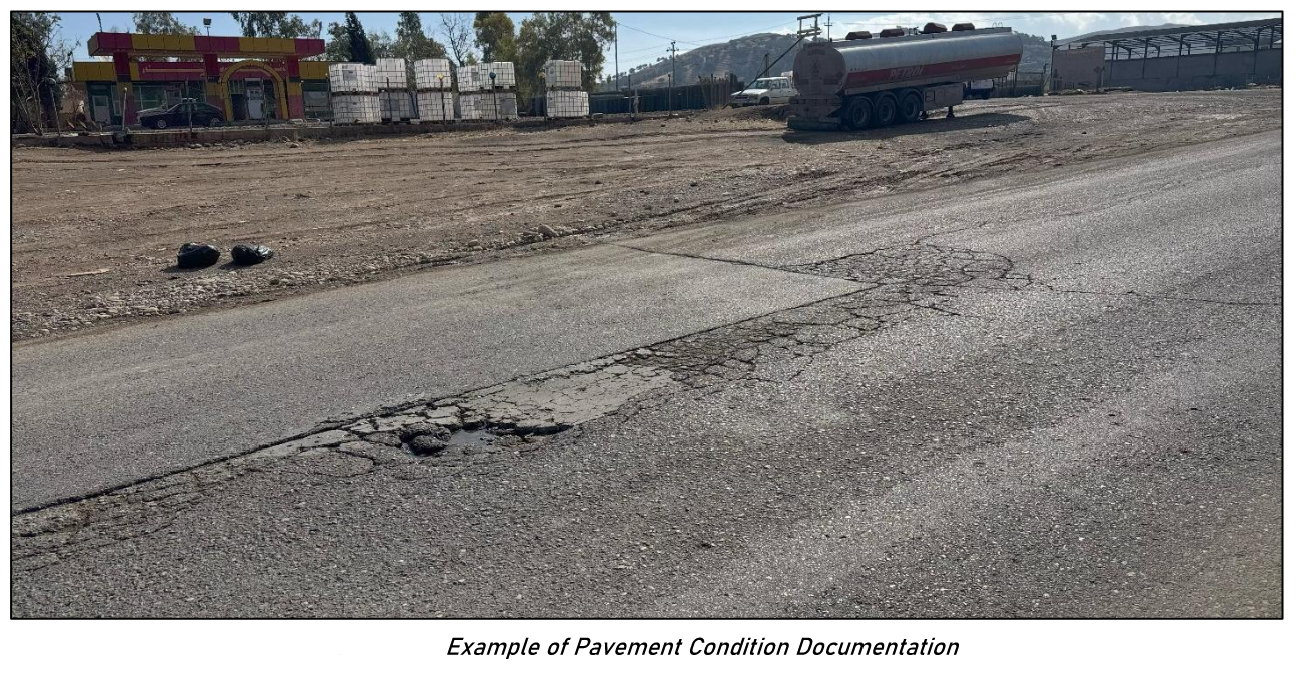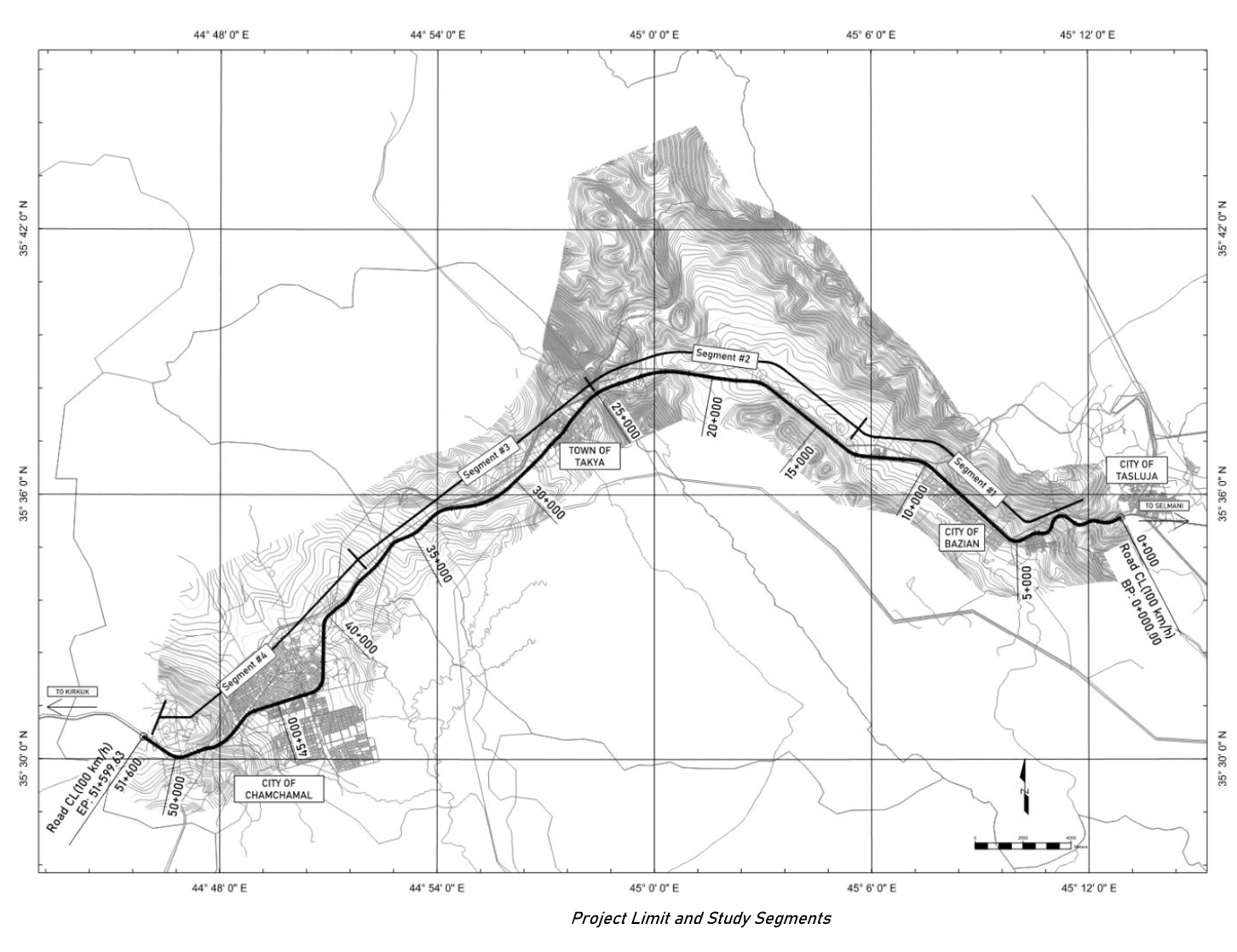

Abacus acted as the Lead Consultant for the preparation of a comprehensive infrastructure feasibility study for the improvement of a strategic 50-kilometer section of the Slemani–Kirkuk Highway, extending from Tasluja to Chamchamal, on behalf of the Kurdistan Regional Government (KRG), Ministry of Housing and Construction. This highway design feasibility study evaluated the technical, economic, environmental, and social viability of upgrading a critical inter-regional corridor to address pavement deterioration, geometric and drainage deficiencies, roadway safety issues, and capacity constraints.
The assignment covered detailed engineering surveys, traffic data collection and analysis, safety assessment, alternatives evaluation, and economic and financial feasibility. The study included roadway widening feasibility study options to improve traffic operations, safety performance, and long-term corridor resilience. Environmental and social components were developed in full compliance with the World Bank Environmental and Social Framework (ESF), including preparation of the Environmental and Social Impact Assessment (ESIA), Environmental and Social Management Plan (ESMP), and Stakeholder Engagement Plan (SEP).
Structured stakeholder engagement activities were undertaken throughout the feasibility study process, including consultations with affected communities, local authorities, and key institutions. Stakeholder feedback was systematically incorporated into project alternatives, environmental mitigation measures, social risk management strategies, and implementation planning.
The completed international World Bank feasibility study proposal and supporting technical documentation provide a robust basis for World Bank review, financing, and implementation, contributing to improved regional connectivity, safer highway infrastructure, and sustainable economic development.