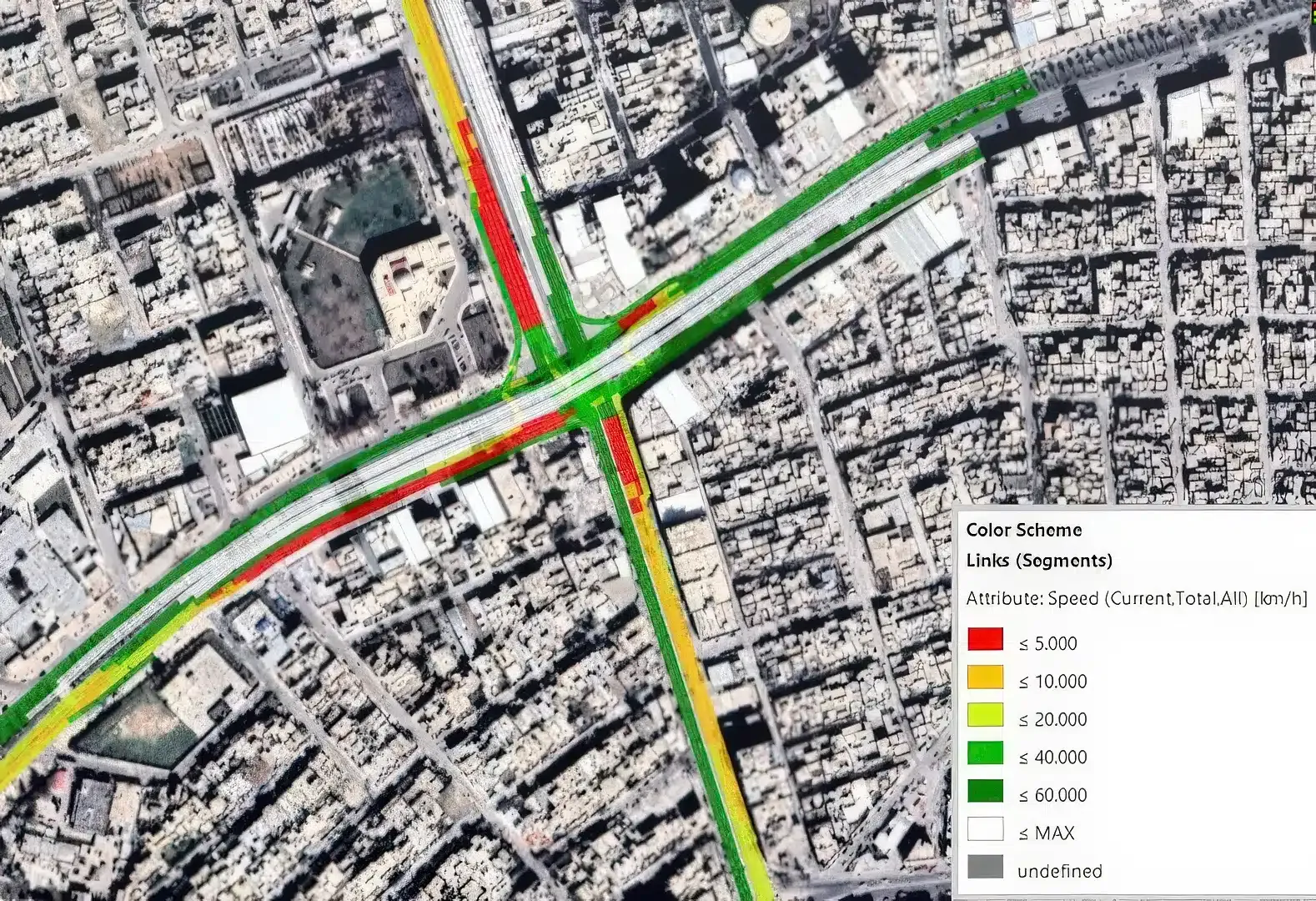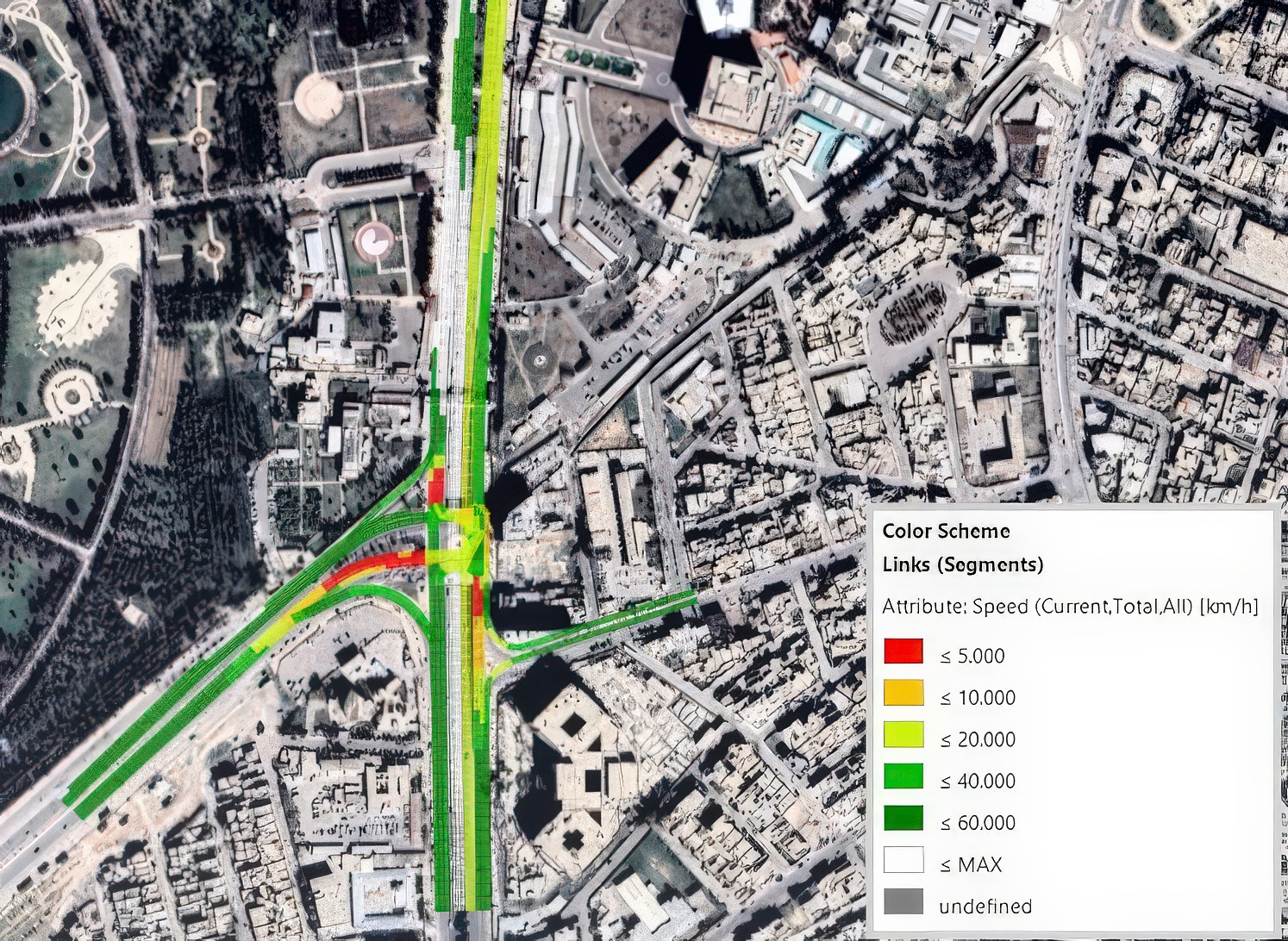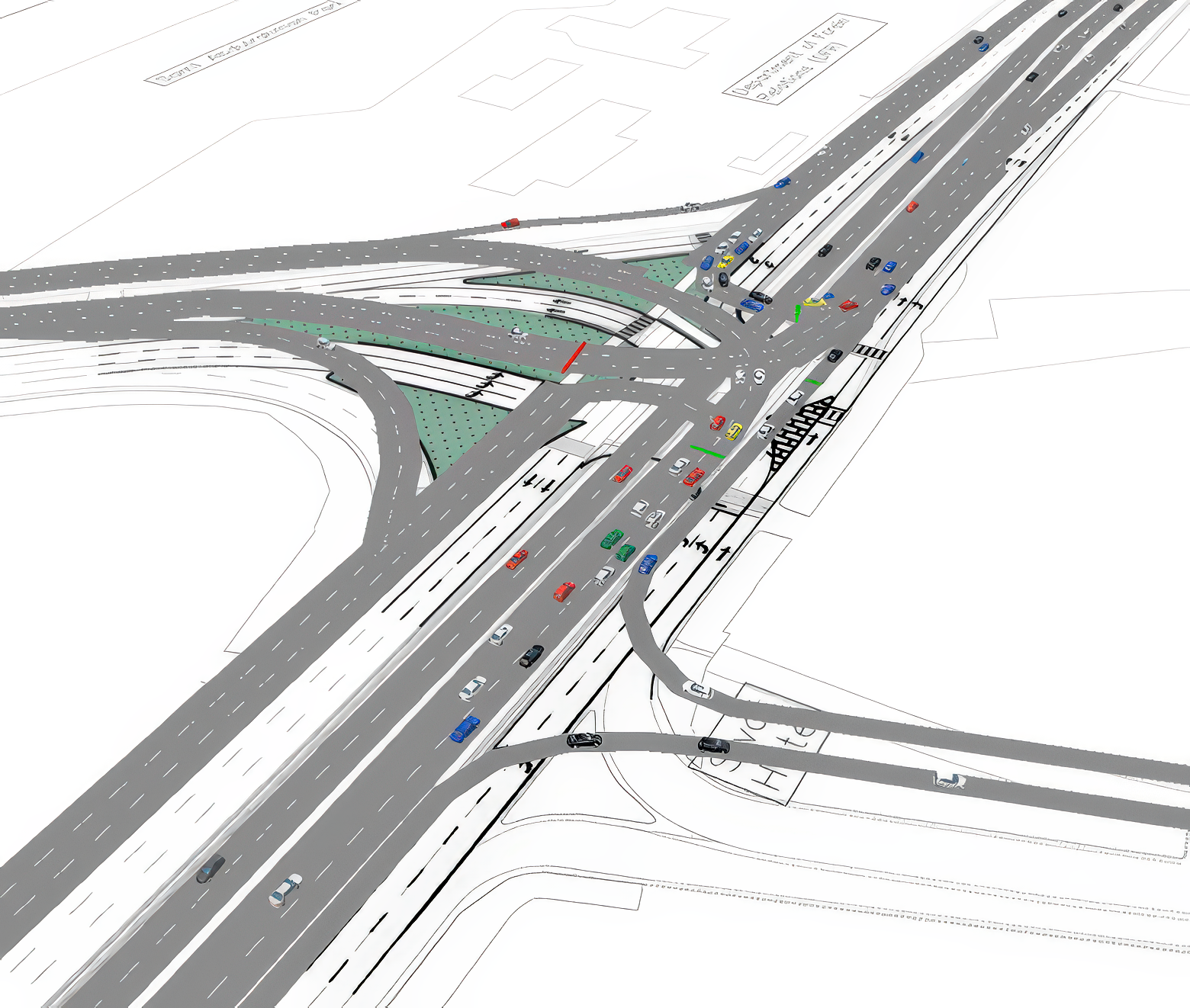

As part of the design services for the 60 m corridor in Erbil, our firm was commissioned to undertake a focused feasibility study aimed at improving traffic operations and safety through the removal of specific turning movements and the redesign of a key intersection. The study was structured around three core service components:
Traffic Data Collection:
Comprehensive traffic data were collected at the study intersection and along the corridor, including classified turning-movement counts, peak-hour volumes, traffic composition, and observed operational constraints. The data provided a reliable baseline for understanding existing demand patterns and conflict points.
Existing Traffic Conditions Simulation:
Using the collected data, the current traffic conditions were modeled and simulated to assess intersection performance under existing geometry and control. Key indicators such as delays, queue lengths, level of service, and movement-specific conflicts were analyzed to identify deficiencies and operational bottlenecks.
Concept Development:
Based on the simulation results, alternative conceptual solutions were developed focusing on the removal or restriction of selected turning movements and the reconfiguration of the intersection layout. The concepts were evaluated at a planning and preliminary engineering level to demonstrate their effectiveness in improving traffic flow, reducing conflicts, and enhancing overall corridor performance, while remaining compatible with right-of-way constraints and local regulations.